
What's new

Can a human-created song that uses Synthesizer V as a vocalist be pitched as "AI-free?"

Brice J. Bentley

New member
So many songs today are being written and composed by AI. AI-generated music has become so prolific that it's no surprise some writers and producers are feeling a need to signal that they're creating music without it. On VI-Control, there's a spirited debate raging on about whether or not someone can pitch their music as "AI-free" if it was 100% written, composed, and arranged by humans, but the vocals were performed by Synthesizer V, an AI-driven vocal software program.

Even though Synthesizer V is an AI-driven program, it cannot create anything on its own. It operates the same way as a virtual instrument where you play in the notes you want (and in this case also the words) and it responds. What makes it different is that the AI technology results in a more realistic performance off the bat. Well, some sample-based and modeled libraries are pretty realistic off the bat, too, such as Straight Ahead Samples' Smart Delay libraries, so that aspect of music creation is nothing new.

So the question comes down to what does "AI free" mean to you? Here's what it means to me:

If you send me an audio clip and say "Brice, check out my new song" the only thing that matters to me is that it's truly YOUR song and not wholly or partially written/composed by AI. It won't matter if the sounds I'm hearing are from real instruments, sample libraries, modeled libraries, synthesizers, or AI-driven virtual instruments or vocals. As long as you truly wrote, composed, arranged, and produced the song using a musical instrument or a mouse, then I'm OK with you labeling your music as AI-free, even if using Synthesizer V means it technically isn't.

When you hire a vocalist, you hand them the lyrics and the music, and they sing the song in their style. They'll even ad-lib here and there. When you use Synthesizer V, you input the notes and lyrics, and the voicebank sings the song in its style, but it can't ad-lib. This means you're technically handling more of the creation process with Synthesizer V than if you hired a singer.

It's for this reason that, in my opinion, using Synthesizer V (or any other AI-driven virtual instrument or vocal program) does not need to be designated in the same way as if you used AI to write lyrics, create a melody, assist with arranging, or assist with mixing. In my personal opinion, the former can be pitched as "AI free" while the latter cannot, since only the latter delegates creativity to AI.

One member on the other forum brought up a good point about AI vocals with, "...the end user listener ... could care less how [the music is] engineered. They want to know if they're listening to robots." I think that does apply to a lot of people in the general public, but personally, I'm far more concerned with whether or not the song I'm hearing was created by those robots.
 
the only thing that matters to me is that it's truly YOUR song and not wholly or partially written/composed by AI.
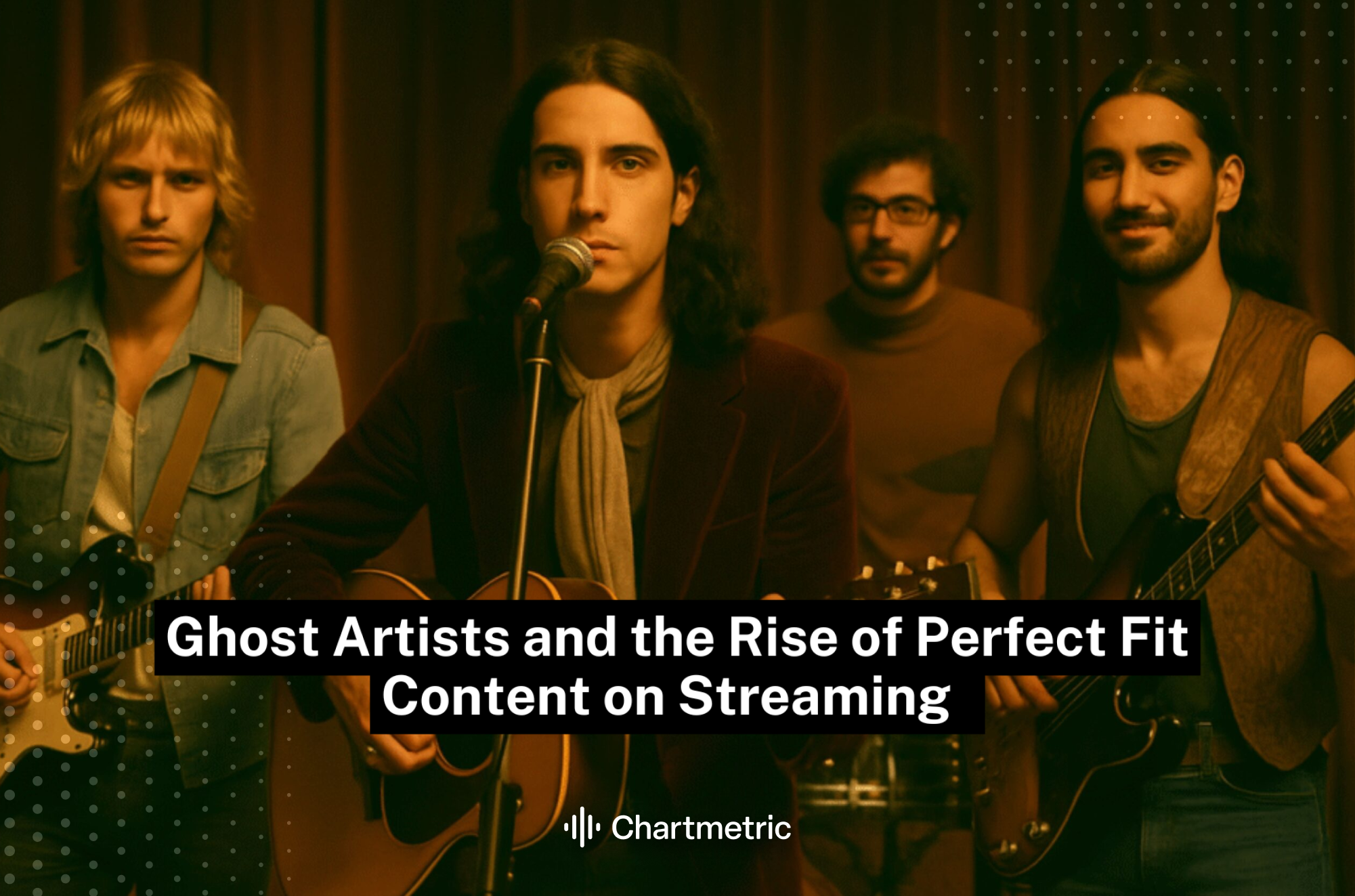
But how would you know? According to Warren Huart (Rick Beato also) people are now using AI all over the place to help them write their songs, and then going back in and replacing the AI gen with real musicians/vocals. Presumably, to avoid an AI stigma, and not get rejected when trying to place into “AI-free” streaming/play-lists (he didn’t elaborate)...perhaps also to “simplify" registering a copyright?

Taking this to the logical conclusion, even seeing a live show nowadays of a singer-songwriter or band, it is possible that behind the scenes, their song was written by (or with) SUNO. Or, they may have used Chat GPT to assist with the lyrics (or write the lyrics), generate the music with SUNO--on and on.

Putting my listener hat on, I wish to avoid music made with AI as much as possible, but since I have no way of verifying, all I really have left is simply my taste--whether I like the music, or not🤷‍♂️

the video from Warren Huart:


Rick Beato telling similar story:
(SUNO is 4th most downloaded music app, and more…)
 
I already stated my thoughts about all this in the VI-C thread referenced by OP, so I'm not going to repeat it all here. But there are some considerations I want to mention that may be relevant to this thread.

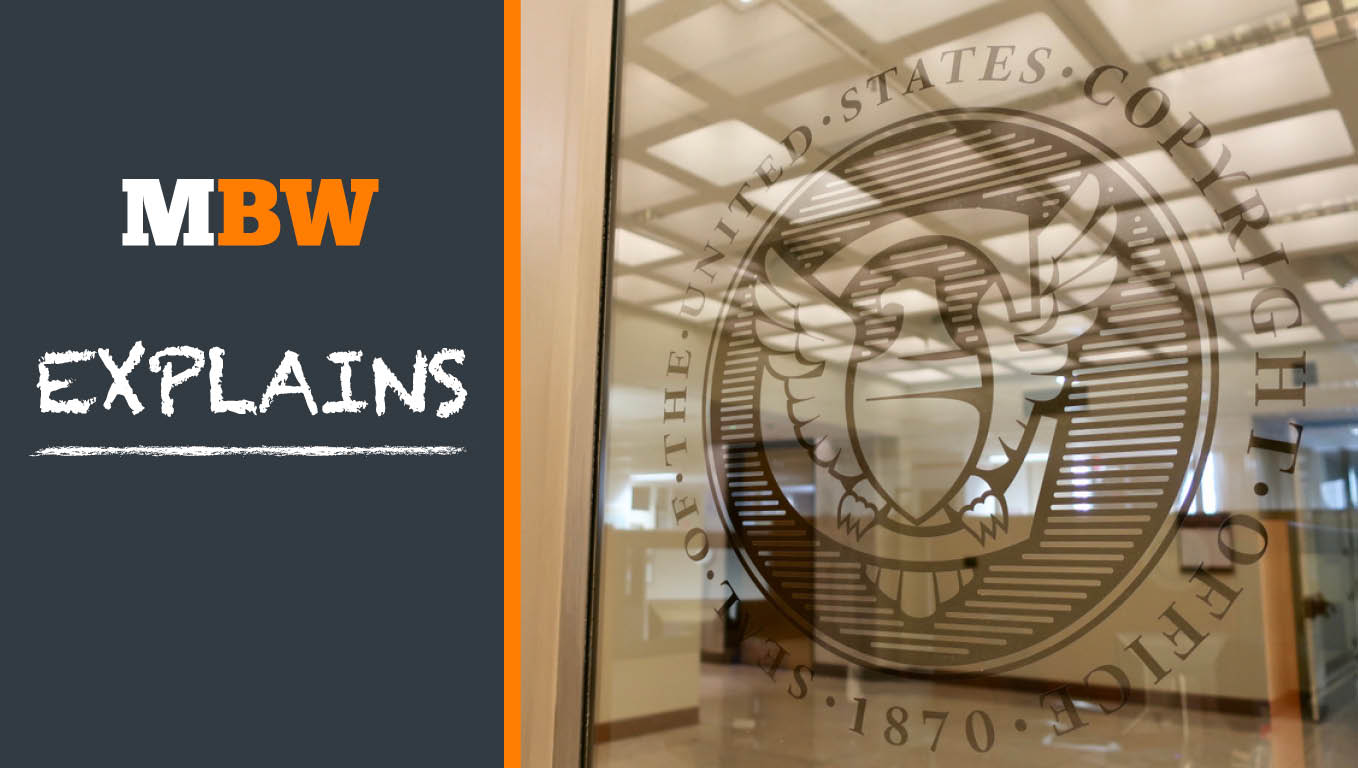
It's absolutely true that using an AI-driven plugin for vocals and other sounds is completely different than using Suno to create an entire song from a prompt. As I mentioned in the VI-C thread, the US Copyright Office, and those concerned with the legal issues surrounding generative AI, have already recognized that difference by creating two designations: AI Generated and AI Assisted.

AI Generated works are not subject to copyright protection, while AI Assisted works are. This distinction may not matter to the general public, but it's vitally important for anyone trying to earn money from their creative works, because without officially recognized rights ownership, there's no way to protect works from being used by anyone without restriction, and no way to enforce payments.

Publishers, music supervisors, record labels, and sync libraries in particular, don't want to get entangled with AI generated content because of this, and some may even shun AI assisted works just so they can honestly say they only represent 100% human created content.

So if you feel okay pitching a song that utilizes Synth V and calling it 100% human created, you're certainly entitled to do so, and depending on the circumstances, you might get away with it. But I just want to point out that I can spot a Synth V vocal a mile away, just like I can spot those annoying AI narrators on YouTube videos. If I can detect Synth V, you can bet the people whose livelihood depends on distributing and licensing AI-free music, will certainly be able to tell. So proceed with caution when pitching your material as AI-free.

Ironically, Suno-generated vocals are significantly better, and that's why some of those songs have risen to popularity on streaming services. But Synth V, Voice AI, Ace Studio, ReSing, etc. all have obvious flaws and telltale quirks, especially once you know what to listen for. I doubt very much that a publisher or sync library would accept tracks with vocals performed by these plugins - not just because they're AI, but because they don't sound like a polished professional vocal. However, it's possible one could get away with these plugins when used on background vocals.

So without a doubt, the two current official AI designations are extremely blunt, making no allowances for the different types of AI implementations. But as I pointed out in a rather lengthy post on the VI-C thread, besides us musicians, I'm not sure most folks would really care about, or even comprehend, a more detailed and granular set of distinctions.

It's especially unfortunate in the case of Synth V, Voice AI, etc. because they are fundamentally no different than typical sample libraries. They all do exactly the same thing: transform the notes we write/play/sing into different sounds. But from a technical standpoint, AI happens to be involved in generating vocal sounds, and it's pretty obvious.
 
But how would you know?
You wouldn't. You also wouldn't know if the person were using prefabricated backing tracks, like a construction kit. The only way you'd know is if they voluntarily revealed that information. A person stating their music is "AI-free" at least gives me some assurance that they didn't use Suno or Chat GPT to assist in the song's creation. In my opinion, whether or not they used Synthesizer V or hired a real vocalist is inconsequential to the "AI free" designation.

So if you feel okay pitching a song that utilizes Synth V and calling it 100% human created...
But it is 100% human created. The vocalist and some or all of the instruments may be virtual, but every note of the song was written, composed, and arranged by a human.

As you can tell, I am obviously lumping Synthesizer V into the same category as virtual instruments. I'm doing that intentionally because a lead vocal is just one element of a song no different from a violin solo. If you compose a song from scratch and perform a virtual violin solo in it, and that virtual violin doesn't diminish your "100% human created" designation, then neither should a virtual vocalist.

Technically AI is involved with Synthesizer V just as it will be involved with all kinds of AI-driven virtual instruments in the future, but if that only means a better, more realistic performance and has nothing to do with the creative process, then I welcome those composers to designate their tracks as "AI free" if they want to.

But from a technical standpoint, AI happens to be involved in generating vocal sounds, and it's pretty obvious.
And it's that technicality that means nothing to me, personally, because synthetic vocals have been used for years. Imagine that in order to designate your song as "AI free" you had to replace your Synthesizer V vocals with Vocaloid versions 1-5. Technically that would be "AI free", but wouldn't you prefer the song you wrote, composed, and recorded to have a better-sounding vocal than an older version of Vocaloid?

In my opinion, go ahead and use Synthesizer V to get that better-sounding vocalist, and feel free to retain your self-imposed "100% human-created" designation. I don't care how fake your vocalist sounds as long as you wrote and composed the song without the aid of AI.

According to Warren Huart (Rick Beato also) people are now using AI all over the place to help them write their songs, and then going back in and replacing the AI gen with real musicians/vocals.
I have no doubt this is happening. If a person does that, they can get away with saying their music "100% human created" even if it's not. That makes me sick.

To me, AI in songwriting and composing is like the Dark Side of the Force — a powerful, easy, devouring path. I don't care if you're an amateur bedroom composer or a seasoned veteran — once you tap into AI for creative input and use it, you've gone over to the Dark Side and there is no coming back. Your use of an AI-driven virtual vocalist or virtual instrument, by comparison, is inconsequential.

Excellent opinions, everyone! Thank you! I mainly started this thread because I thought the hotter topic might help to bring some of the forum's lurkers out of the woodwork. VI-Control has the benefit of the gigantic membership, but this is a perfect forum for discussing AI in music production.
 
As you can tell, I am obviously lumping Synthesizer V into the same category as virtual instruments. I'm doing that intentionally because a lead vocal is just one element of a song no different from a violin solo. If you compose a song from scratch and perform a virtual violin solo in it, and that virtual violin doesn't diminish your "100% human created" designation, then neither should a virtual vocalist.
Totally agree. As I mentioned, AI voices are really no different than typical sample libraries. They all perform the same exact general function.

But it is 100% human created. The vocalist and some or all of the instruments may be virtual, but every note of the song was written, composed, and arranged by a human.
This actually brings up an important distinction that I failed to consider in my previous posts, and interestingly enough, that I never hear being discussed with regards to AI.

A recorded song has at least two copyrights:
  • A creative copyright for the actual writing of the song, that minimally, is defined by just melody and lyrics.
  • A performance copyright for the actual recording of the song.
  • Also, if a musical arrangement adds new, original creative elements to a song, the arrangement can be copyrighted as a derivative work.
Clearly, as you stated, synthetic voices have nothing to do with the creation of a song, so assuming you wrote the melody and lyrics yourself (or with co-writers), you can unequivocally state the creation of your song is 100% AI free. And as @Louie pointed out, nobody could tell if AI was used to write the song, anyway. If you used ChatGPT to help with the lyrics, or LANDR Composer or Scaler to help write the music, you could still claim it's 100% AI free and no one would be the wiser.

But for the actual recording of the song, if a synthetic voice is used for the vocals, then technically, that recording would be deemed AI Assisted. Not my designation, but how the legal pundits have chosen to view it.

If you're only using the AI assisted recording as a demo with the intention of replacing the synthetic vocal with a human singer, then there's no issue. But if you pitch the AI assisted recording for commercial use, then the AI factor will likely need to be addressed.

And if we continue pulling on this thread a little more, when we use samples, sample libraries, loops, arpeggiators, etc. can we truly say our recordings are 100% human performed? Perhaps this whole issue of AI assistance will eventually cause an overall re-examination of all the helper tools we've traditionally used in our productions, and force new language to distinguish between the use of ANY kind of performative assistance, AI or non-AI, versus 100% human performed recordings 🤷‍♂️
 
Last edited:
And if we continue pulling on this thread a little more, when we use samples, sample libraries, loops, arpeggiators, etc. can we truly say our recordings are 100% human performed? Perhaps this whole issue of AI assistance will eventually cause an overall re-examination of all the helper tools we've traditionally used in our productions, and force new language to distinguish between the use of ANY kind of performative assistance, AI or non-AI, versus 100% human performed recordings 🤷‍♂️
Nailed it! I do believe AI will cause a re-examination of helper tools because it's taken helping from "let me get you started" to as far as "let me do the whole thing for you." I see AI as the natural evolution of bedroom music production which many, though not all, bedroom producers will follow:

Level 1. Doing everything oneself (using real and/or virtual instruments)
Level 2. Doing most things by oneself (using MIDI files and beats/phrases)
Level 3. Doing a few things by oneself (using construction kits, backing tracks, Chat GPT, etc.)
Level 4. Doing nothing by oneself (letting AI do all the work)

What's far more important to me than whether or not AI is being used at Level 1 is the fact that the producer is holding himself to Level 1. I hope someday the legal pundits will rethink their definition of "AI-Assisted" so that the definition only stigmatizes denotes producers who use it to create for them, and not producers who create with virtual instruments/vocals that just happen to be AI-driven.
 
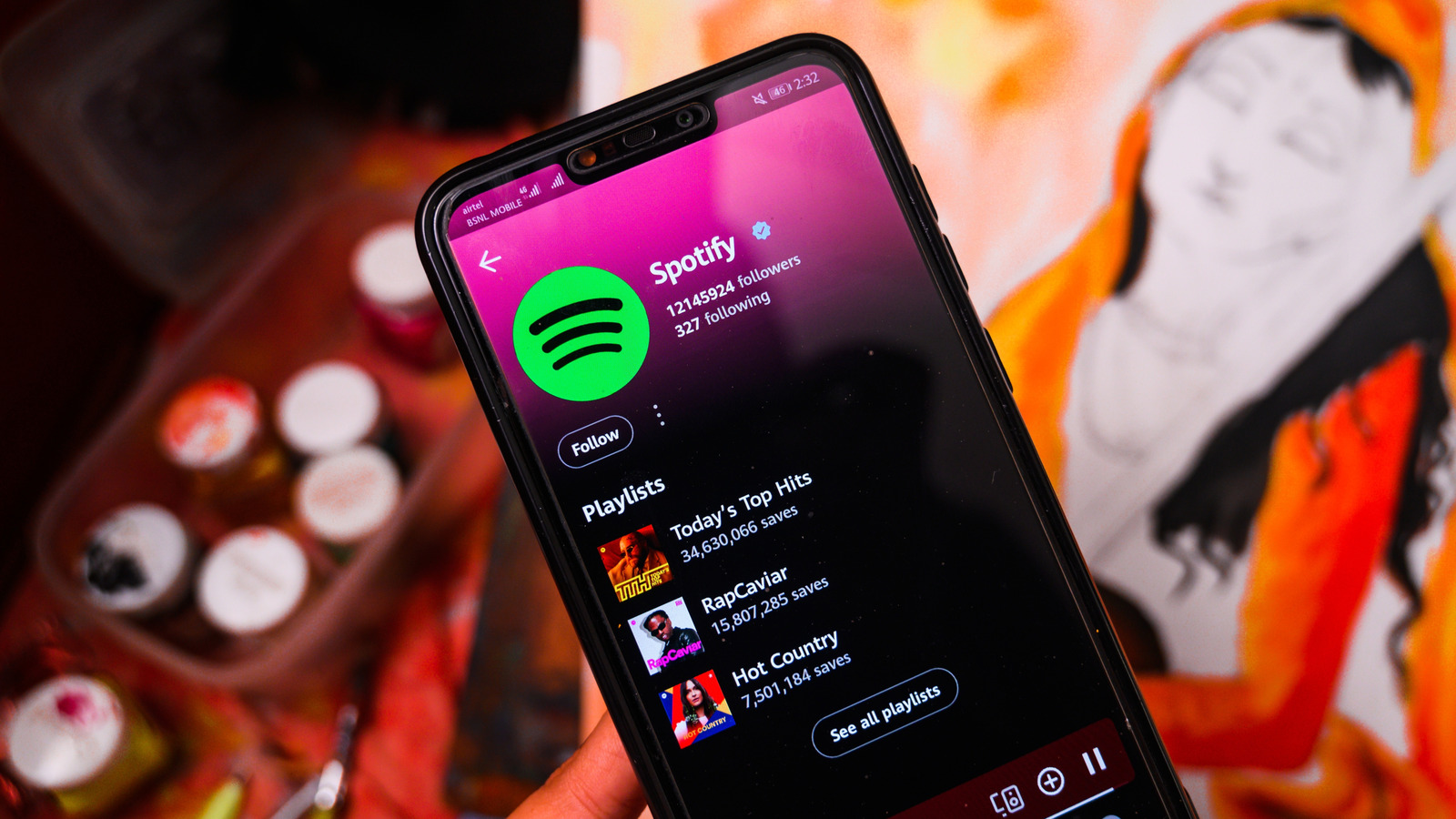
No matter how music is defined, there are a million songs going up on Spotify each week. I believe that 99% of the ones that matter to listeners will be written and performed by humans.

Adele, Taylor Swift, Bruce Springsteen, Billie Eilish, Dylan, Ed Sheeran, and whoever floats your boat over Suno. People. What technology these real people use doesn't matter. The only thing that matters is if the work they put out resonates with listeners.

Of course there will be AI slop that becomes hits. There has always been a place in the business for "Yummy, Yummy Yummy I've Got Love In My Tummy." That kind of stuff doesn't diminish the Beatles.

Time will sort this all out. People who say there's nothing good out there should listen to Mitski. Good stuff is out there. You just have to seek it out.

Dylan said something like the world doesn't need any more songs. We already have more than enough. We don't need any more songs. Except... if the person writing them has a pure heart.
 
Here is something that is in-work apparently: a disclosure standard for disclosing where and how AI is being used, developed for Spotify by Digital Data Exchange (DDEX).

"This standard gives artists and rights holders a way to clearly indicate where and how AI played a role in the creation of a track—whether that’s AI-generated vocals, instrumentation, or post-production. This change is about strengthening trust across the platform. It’s not about punishing artists who use AI responsibly or down-ranking tracks for disclosing information about how they were made”.

"This is an effort that will require broad industry alignment, and we’re proud to be working on this standard alongside a wide range of industry partners, including Amuse, AudioSalad, Believe, CD Baby, DistroKid, Downtown Artist & Label Services, EMPIRE, EmuBands, Encoding Management Service – EMS GmbH, FUGA, IDOL, Kontor New Media, Labelcamp, NueMeta, Revelator, RouteNote, SonoSuite, Soundrop, and Supply Chain."


I find that very interesting considering Spotify itself has been responsible for populating playlists with AI-generated music. Maybe that strategy backfired for them.

 
So the question comes down to what does "AI free" mean to you?
The question comes down to what "AI free" means to the person reading the label, not to you.

An average person would think that a vocal "AI free" would mean that it was not generated by a computer.

To an average person, a computer generated voice is a computer generated voice. Using concatenative synthesis instead of a neural network is a distinction without a difference. It's still a computer generated voice, a "robot" voice.

It's for this reason that, in my opinion, using Synthesizer V (or any other AI-driven virtual instrument or vocal program) does not need to be designated in the same way as if you used AI to write lyrics, create a melody, assist with arranging, or assist with mixing. In my personal opinion, the former can be pitched as "AI free" while the latter cannot, since only the latter delegates creativity to AI.
We're the heroes of our own stories. The composer thinks of themselves as most important, because they created the music. The singer thinks of themselves as being critical, because they give voice and emotion to the music. The company thinks of themselves as being key, because music is a fungible product, and the end goal is to create profit without which the music couldn't exist.

The key idea is credit. It's the same as using a ghostwriter. If someone didn't do the work, they shouldn't explicitly or implicitly take the credit. And as the heroes, we are the only ones who really deserve the credit. Everyone else can be replaced.

If someone used AI to help write the song, then that person should not take full credit. If someone used AI to create the song, they should take none of the credit. In either case, AI should be credited.

This is the same with computer generated voices. If the vocals and melody were created with AI, then AI should receive the credit. If the base vocal was computer generated, and something like RVC was used to give the impression that a someone else's voice created the performance, that should also be credited. Otherwise, it implicitly gives someone credit for a vocal performance they didn't do.

If a computer voice was used to perform the song, that should also be credited. Otherwise, it implicitly gives the impression of a human performance. That's the goal of most AI vocals - to make the performance indistinguishable from a human performance.

One member on the other forum brought up a good point about AI vocals with, "...the end user listener ... could care less how [the music is] engineered. They want to know if they're listening to robots." I think that does apply to a lot of people in the general public, but personally, I'm far more concerned with whether or not the song I'm hearing was created by those robots.
The creation of the music is the most important thing to you. But the average listener isn't going to make that distinction.

By way of analogy: imagine a song labeled "No Autotune used on this song", only to find out that Melodyne was used instead. Technically, "Xerox" doesn't refer to all photostatic copying processes; "Google" isn't a generic web search, and "Kleenex" isn't interchangable with any other facial tissue.

But to an average person, if a computer was used to create a vocal, it's "AI". And so to label it as "AI free" would be misleading to most people reading the label.
 
This is the same with computer generated voices. If the vocals and melody were created with AI, then AI should receive the credit. If the base vocal was computer generated, and something like RVC was used to give the impression that a someone else's voice created the performance, that should also be credited. Otherwise, it implicitly gives someone credit for a vocal performance they didn't do.
For that matter, this is also true of sample libraries. The BBC orchestra didn't actually play on my recording, and neither did Tina Guo or Joshua Bell, and it would be wrong to credit them as such, even though I may have used sample libraries that include their performances.
 
Last edited:
The question comes down to what "AI free" means to the person reading the label, not to you.

An average person would think that a vocal "AI free" would mean that it was not generated by a computer.

To an average person, a computer generated voice is a computer generated voice. Using concatenative synthesis instead of a neural network is a distinction without a difference. It's still a computer generated voice, a "robot" voice.
That's basically my point. "AI free" means different things to different people. Whatever we assume "AI-Free" might mean to our listeners/fans, we'll be both right and wrong.

So I default to what "AI-free" means to me.

To me, Synthesizer V is just a robust virtual instrument because I use it exactly like a virtual instrument. In the future when virtual instruments are AI-driven, I will continue to use them no differently than I currently use sampled, synthesized, and modeled virtual instruments. At no point will I allow AI to take over any of the creative process behind my music.

Regarding the sound recording, if I am currently not expected to disclaim that the some of the instrument/vocal/choir content in my music is sampled, synthesized, or modeled, then I feel it moot to disclaim which of any of those tracks is virtual by means of an AI-driven engine. The AI affects only the sound. I'm still playing every note and writing every word.

If a computer voice was used to perform the song, that should also be credited. Otherwise, it implicitly gives the impression of a human performance. That's the goal of most AI vocals - to make the performance indistinguishable from a human performance.
Virtual instruments have been doing the same thing for decades — giving the impression of a human performance on a real instrument.

When I create a song using virtual orchestral instruments, I don't credit myself as the violinist, cellist, 1st trumpet, etc. nor do I credit the libraries. I just give myself a blanket credit as the song's instrumentalist since I performed everything virtual on a keyboard.

When I use Synthesizer V, I don't credit Synthesizer V, Dreamtonics, or the voicebank. Per Dreamtonics' terms of use, I credit no one as the vocalist. My blanket self-credit as the song's instrumentalist covers the Synthesizer V tracks.

The creation of the music is the most important thing to you. But the average listener isn't going to make that distinction.

But to an average person, if a computer was used to create a vocal, it's "AI". And so to label it as "AI free" would be misleading to most people reading the label.
I respect that opinion, but I don't know if I agree with that assumption of what "the average person" or what "most people" are going to think. I'll concede could be wrong, but I think opinions will be all over the map.

Since there hasn't been any public outcry on the fact that a lot of the music people have been hearing for the past two decades has been performed with virtual instruments, then I'm not going to sweat my self-imposed "AI-free" distinction using Synthesizer V like a sampled virtual instrument. In my opinion, the important distinction is not that the Synthesizer V vocals are AI-driven, but that they're virtual.

By way of analogy: imagine a song labeled "No Autotune used on this song", only to find out that Melodyne was used instead. Technically, "Xerox" doesn't refer to all photostatic copying processes; "Google" isn't a generic web search, and "Kleenex" isn't interchangable with any other facial tissue.
I understand what you're saying, but I don't like the analogy because Autotune can only perform one function whereas AI can do so many things. The fact that AI can make a virtual instrument/vocal track sound more realistic is, in my opinion, just another step in the evolution of virtual instruments/vocals. That application of AI is so peanuts compared to AI literally writing and composing music that I'm not going to designate my music with any kind of an AI label.

I will never use AI to write, compose, or mix any of my material. Every note heard in my songs is human-written and human-arranged with a mix of human-performed real vocals/instruments and human-performed virtual vocals/instruments, and human-mixed. AI will not change any of that. Therefore I have no qualms about anyone who does what I do as pitching their music as AI-free. I will not attach any AI label to my music just because one track that I wrote and performed note-for-note has a virtual instrument or vocal whose sound happens to be driven by AI instead of modeling or scripting.

My intent is to separate myself from the stigma of "AI-Assisted" because my personal belief is that people who see any kind of AI label are going to assume it's robot-written music and unwittingly pass on the opportunity to hear a 100% human-written and arranged song.

TL;DR:

If the music industry mandated a new label on all music denoting the use of virtual vocalists and/or any virtual instrumentation, I would agreeably apply that label to my music, but the label would have to distinguish virtual from AI-Assisted because whether I use Synthesizer V, Vocaloid, a sample vocal library, or a real vocalist, the only intelligence behind my music lies in the gray matter between my ears.
 
Interesting discussion. I would also raise the instruments (as so far this has been focussed on vocals) - if a VI uses AI to determine the amount of slur/legato/etc does that then mean we are no longer playing it?
 
Interesting discussion. I would also raise the instruments (as so far this has been focussed on vocals) - if a VI uses AI to determine the amount of slur/legato/etc does that then mean we are no longer playing it?
In my opinion, you're still 100% playing it. If legato from a Straight Ahead Samples Smart Delay library and legato from an AI-driven library are indistinguishable, does the song with the AI-driven legato really need to be labeled as AI-Assisted? I personally don't care how the virtual instrument's legato was created as long as you, the producer/composer, chose and played the notes (and manipulated any key switches, note data, or other commands) that triggered the legato.
 
…as long as you, the producer/composer, chose and played the notes (and manipulated any key switches, note data, or other commands) that triggered the legato.
Yes but what if the plugin chooses for you? Another example: say I’m playing 1/16th triplets at 170 BPM would it be AI assisted if the VI’s AI chooses to use spiccato samples instead of staccato samples?
Think about things like ‘Flow’ from VSL with its interpretation of what you play.
 
Edit: I am not saying you are wrong but I am saying that already the ‘lines’ are getting blurred. People are concerned about AI written stuff but where is the line?
Another example is Omnisphere 3’s mutate feature.
Should we be concerned about these things or is it only the ‘obvious’ cases that raise concern if so how do we distinguish them clearly or is it just a matter of degrees and shades?
 
Yes but what if the plugin chooses for you? Another example: say I’m playing 1/16th triplets at 170 BPM would it be AI assisted if the VI’s AI chooses to use spiccato samples instead of staccato samples?
Think about things like ‘Flow’ from VSL with its interpretation of what you play.
I'm not familiar with Flow, but in my book, as long as you play/input every note that the virtual instrument plays, and the virtual instrument is accurately interpreting your input and outputting what you wanted, then you are still playing the part.

Also in my book, as long as you use virtual instrument/vocal libraries in that way, whether the sonic output is AI-driven, sample-driven, or synth-driven is so inconsequential that if you want to pitch your music as "AI-free" so that your virtual tracks don't stigmatize your original song as being AI-assisted, go for it.

Edit: I am not saying you are wrong but I am saying that already the ‘lines’ are getting blurred. People are concerned about AI written stuff but where is the line?
Another example is Omnisphere 3’s mutate feature.
Should we be concerned about these things or is it only the ‘obvious’ cases that raise concern if so how do we distinguish them clearly or is it just a matter of degrees and shades?
I totally agree with how gray and open-ended it's all become. I think all the gray shades and subjectivity makes it impossible for any person to be right or wrong about it.

Phrase libraries, construction kits, MIDI files, and beats have been around for a long time, and music creators who used them were never subjected to stigmatic labels. But then AI happened and it made the song creation process so easy, a monkey could write and produce a radio-ready song. In my opinion, this necessitates a need for labels.

While I think labels like "AI-Created" or "AI-Assisted" are necessary, I want those labels to apply only to works that are wholly or partially AI-written/composed/arranged/mixed. Before anyone tells me I can't pitch my human-written, human-arranged, human-performed, and human-mixed song that happens to use an AI-driven sample/synthesis library as "AI-free" because it's "AI-assisted," the industry will first have to mandate that ALL recorded works using virtual instruments and/or virtual vocals, and ALL works created with construction kits, loops, or phrases, be designated with some kind of blanket "assisted" labels.

As a proud songwriter and producer, I know that AI will eventually power more and more of tools I use to create music, but I won't allow it to feed me creative input. From MIDI sound modules to early sample libraries to modeled libraries to AI-driven libraries, I have been in the driver's seat of my productions all those years, and in the driver's seat I will forever remain. It is for that reason that I will not allow an AI-driven library, which doesn't create a single note that I don't perform, to stigmatize my efforts with an "AI" label.

This is just my opinion. I fully expect plenty of disagreement with my reasoning from other musicians and producers.
 
Discussion on VI control went off the rails pretty quickly ;/
Even if the Synthesizer V performance were indistinguishable from a human's, you can't give credit to the vocalist, so this is an indirect way to detect that it's AI.

To be clear - I like Synthesizer V, I use it sometimes, but it's AI, and you can't label it AI-free. That's not true.
AI assisted - ok,
AI performed - ok,
AI free - not ok.

My preferred way would be to use Synthesizer V and then find a human vocalist to do the part.

There's one more important aspect:
The vocalist is often the leading figure, and their name sells the song. So it's important who sings. Diane Warren may have an infinite number of awards, but people bought Cher and Celine Dione's albums.
I see many creators want to insist that no one cares, but that's simply not true.

We have producers and producers groups who changing the vocalists per song (Massive Attack, Royksopp etc). Personally, I always struggle at concerts because one vocalist has to perform all the songs - it would be difficult to gather all those intimidating names from the album on stage for a single show, and it's usually simply impossible for the full tour.
Despite my best efforts, I usually feel a certain disappointment, because I have the original vocalist's performance in mind. It's not because replacement is bad, it's just because it's not "that".


People don't really want AI vocal, both - fully generated or just preformed, and you know it. This is why we're talking about hiding this information. We wouldn't discuss it if people were excited about it.

Also, "No one will find out" disgust me somehow. If you feel that you need to be shy about your process, maybe change the process?
People who use Suno and hide it are Grifters. Besides, it's clearly stated that it's about quantity. Forgive me for being judgmental. It's easy for me to be certain, as I pursue music purely as a hobby.
 
Last edited:
The Synth V situation is clear to me - it's a programmed performance that was never actually sung by a human, so there's no reasonable way it should be credited to a human singer - that's pretty cut and dry.

But when it comes to vocal substitution plugins (VoiceAI, ReSing, etc.) the line becomes more fuzzy, because those effects are 100% reliant on an original human vocal performance. They alter an original vocal by applying the characteristics of different singers.

Is this really any different than applying pitch correction, formant shifting, saturation, vocoding, distortion, time stretching, etc. to an original human vocal performance? All of these effects are used to alter a vocal, some quite drastically and beyond recognition. Yet we're still okay with crediting the original singer, because regardless of how much the voice was mangled and contorted, a human singer undeniably performed it. The exact same thing can be said of voice substitution plugins.

I realize vocal substitution plugins are naturally touchy because AI is involved, yet there are lots of effects plugins out there that utilize AI, such as Sonible's "smart" plugins, iZotope's Neutron and Ozone, and even AI-driven helper plugins, like Scaler, that everyone is okay with.

I suppose the vocal substitution plugins may be frowned upon because it can be argued they "fool the audience". But is this really anything new? I can use formant shifting, EQ, and pitch shifting to make a singer sound like a different person, in effect, fooling the audience. So what? Heck, Autotune fools audiences into believing an incompetent singer can actually sing on pitch! Where is the line between acceptability and unacceptability?

Anyway, just posting this as food for thought - my own mind is not made up one way or another. AI is so new and evolving so quickly, there really hasn't been enough time for the world to fully understand all the implications or create workable guidelines and standards. It's like we've been given a board game with a giant board, hundreds of pieces, and dozens of oddly-shaped dice, but no rulebook. And just when we think we may have figured out at least part of the game, more pieces are suddenly added along with several decks of undecipherable cards. But still no rulebook.
 
Last edited:
This is a songwriting community. It matters enormously to me that on this forum, this issue is worth debating. I am uncomfortable on Muse Songwriters, which is drifting into AI. I have been mocked there standing up on this issue. Some people have left for this reason. So this conversation is very necessary and I'm grateful for it.

Human beings want to write songs themselves. People want to listen to music by human beings. If this issue doesn't matter here, then where?

But here is my opinion, which admittedly I've kind of stated before.

IMHO whether we like it or not, AI-assisted songs are going to be sung by people who look as beautiful as Olivia Rodrigo and they will become hits. We don't know how much that will be, but I believe it will happen.

But I don't think that Olivia Rodrigo herself will over-use AI, because I know that working on her own songs is very important to her. The same for Taylor Swift, Lorde, Billie Eilish, Phoebe Bridgers, Adele and the rest. People will write their own songs, alone and with human collaborators. Will they look for ideas on ChatGTP when they're stuck? Probably. But they'll decide what they use.

I do believe that crappy AI slop will go on TV shows and movies and commercials. But not on the best TV shows and movies--the ones we actually watch.

What I believe there will be is zillions and zillions of songs being generated in various ways that nobody will ever listen to. AI trees falling in the forest.

Songwriter and Producer is where we make a stand for humans writing songs. And I hope these kinds of debates never stop.
 
Back
Top Bottom